
A Pearl of Great Price
07-26-2026Weekly ReflectionFr. AlbertToday's Gospel presents us with a series of short but profound parables. Jesus compares the Kingdom of Heaven to a hidden treasure, a pearl of great price, a fishing net gathering every kind of fish and finally a wise scribe who brings out treasure both old and new. Jesus says: "The Kingdom of Heaven is like treasure buried in a field, which a person finds and hides again and out of joy goes and sells all that he has and buys that field."
The man does not sell everything because someone forces him. He does not do it reluctantly. Jesus says he does it out of joy. Christian discipleship is not first about sacrifice. It is first about discovering something so beautiful, so valuable, that everything else becomes secondary.
READ MORE
God Works Within the Mess
07-19-2026Weekly ReflectionFr. AlbertToday's Gospel presents one of Jesus' most realistic and challenging parables. He tells us about a farmer who sows good seed in his field. But while everyone is asleep, an enemy comes and sows weeds among the wheat. As the plants begin to grow, the servants notice the problem and immediately ask the master, "Do you want us to go and pull them up?" Surprisingly, the master says no. He tells them to let both grow together until the harvest, when the separation will be made.
At first glance, this response seems strange. Why would a wise farmer allow weeds to remain in his field? Wouldn't they rob the wheat of nutrients and reduce the harvest?
READ MORE
The Soil of the Human Heart
07-12-2026Weekly ReflectionFr. AlbertToday's Gospel presents the parable of the Sower. At first glance, it seems to be a simple story about farming. But beneath the surface, it reveals the mystery of how God's word enters the human heart and why it bears fruit in some lives while remaining unproductive in others. The Sower goes out to sow generously. He scatters seed everywhere - on the path, on rocky ground, among thorns and on rich soil. This alone tells us something important about God.
God does not ration His love and His grace. He does not sow only where success is guaranteed. He offers His word freely to every person, regardless of their past, weaknesses or present circumstances.
READ MORE
Come to Me, and I Will Give You Rest
07-05-2026Weekly ReflectionFr. AlbertToday's Gospel is among the most comforting passages in all of Scripture. It reveals not only who Jesus is, but also what kind of relationship God desires with each of us. In a world filled with noise, stress, uncertainty and endless expectations, Jesus offers an invitation that remains as relevant today as it was two thousand years ago.
We all carry burdens. Some are visible: illness, financial hardship, family struggles or loneliness. Others remain hidden: guilt, disappointment, fear about the future, regret over the past or wounds that no one else knows about. Jesus sees every burden, even those we cannot express in words. And instead of placing another weight upon our shoulders, He offers rest.
READ MORE
Not to Lose, But to Find
06-28-2026Weekly ReflectionFr. AlbertIn today's Gospel, Jesus speaks words that can sound challenging, even unsettling: "Whoever loves father or mother more than me is not worthy of me; and whoever loves son or daughter more than me is not worthy of me." At first hearing, we might wonder: Is Jesus asking us to love our families less? Is He asking us to neglect those closest to us?
The answer is no. Jesus is not diminishing the importance of family. Throughout Scripture, God commands us to honor our parents, care for our children, and love one another. What Jesus is teaching is something deeper: every human relationship finds its proper place only when God is first.
READ MORE
Do Not Be Afraid
06-21-2026Weekly ReflectionFr. AlbertToday's Gospel speaks directly to one of the most powerful forces in human life: Fear. Fear influences our decisions, our relationships, our faith, and even our understanding of ourselves. Jesus knew that His disciples would encounter opposition, misunderstanding, rejection, and persecution. Therefore, before sending them into the world, He repeats a command three times in different ways: "Do not be afraid."
The repetition is significant. Jesus is not offering a simple encouragement; He is addressing a deep human struggle. Fear can silence truth, weaken conviction, and prevent us from living fully as disciples.
READ MORE
11th Sunday in Ordinary Time
06-14-2026Weekly ReflectionFr. AlbertIn today's Gospel, we are given a remarkable glimpse into the hearts of Jesus. Before He teaches, before He heals, before He sends out His disciples, Matthew tells us something profoundly important: Jesus sees the crowds and is moved with compassion. He looks upon the people and sees more than faces in a crowd. He sees their struggles, fears, wounds, disappointments, and spiritual hunger. Matthew describes them as "troubled and abandoned, like a sheep without a shepherd." They were searching for meaning, guidance, hope, and healing.
READ MORE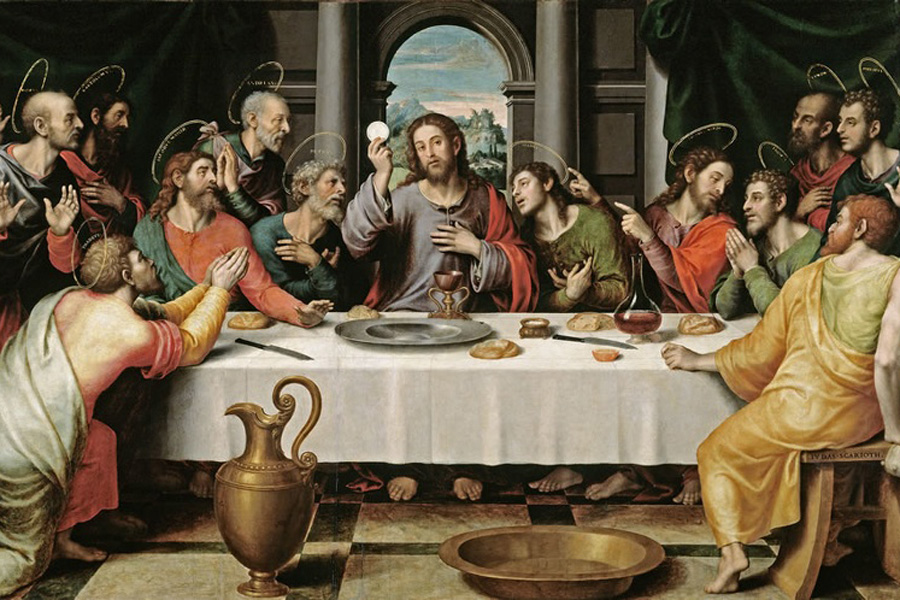
The Solemnity of the Most Holy Body and Blood of Christ
06-07-2026Weekly ReflectionFr. AlbertToday, the Church celebrates one of the most profound mysteries of our faith: the Solemnity of the Most Holy Body and Blood of Christ, traditionally known as Corpus Christi. On this day, we do not simply remember a past event. We celebrate a living reality- the abiding presence of Jesus Christ in the Holy Eucharist.
In the Gospel, Jesus speaks words that were shocking to His listeners and remain challenging even today: "I am the living bread that came down from heaven; whoever eats this bread will live forever."
READ MORE
The Most Holy Trinity
05-31-2026Weekly ReflectionFr. AlbertOn this great feast of the Most Holy Trinity, the Church invites us to stand before the deepest mystery of our faith; that is God is not solitude, but communion; not isolation, but eternal love shared between the Father, the Son and the Holy Spirit.
And into this mystery, the Gospel today speaks with astonishing simplicity: "For God so loved the world that he gave his only Son, so that everyone who believes in him might not perish but might have eternal life."
READ MORE
Pentecost Sunday
05-24-2026Weekly ReflectionFr. AlbertThe Gospel of John brings us into a locked room filled with fear, confusion, and uncertainty. The disciples had witnessed the death of Jesus. Their hopes seemed shattered. Even after hearing reports of the Resurrection, they remained hidden behind closed doors, afraid of what might happen next. And into that fear, Jesus comes, not with condemnation, not with anger because they abandoned Him, not with disappointment because of their weakness.
READ MORE
The Ascension of the Lord
05-17-2026Weekly ReflectionFr. AlbertToday the Church celebrates the glorious feast of the Ascension of the Lord. Forty days after His Resurrection, Jesus returns to the Father not to abandon the world but to reign over it, to intercede for it, and to prepare humanity for the gift of the Holy Spirit. The Ascension is not an ending. It is a beginning. Christ ascends so that the Church may arise.
The Gospel given to us today from the Gospel of John is often called the "High priestly prayer" of Jesus. Before His passion, before the Cross, before the disciples fully understood what was happening, Jesus lifted His eyes to heaven and prayed. What we hear today is not merely instruction; it is the heart of Christ revealed in prayer.
READ MORE
I Will Not Leave You Orphaned...
05-10-2026Weekly ReflectionFr. AlbertToday's Gospel gives us part of Jesus' farewell discourse at the Last Supper - a moment charged with tenderness, urgency, and promise. He is preparing his disciples for a world in which he will no longer be physically present, yet He insists that His absence will not mean abandonment. instead, it will open the way to a deeper, more intimate presence. Jesus begins not with a command but with a relationship. Love comes first. obedience is not presented as a burden imposed from outside, but as the natural fruit of love.
READ MORE
5th Sunday of Easter
05-03-2026Weekly ReflectionFr. AlbertIn the Gospel of John 14:1-12, we find Jesus speaking to his disciples on the night before his passion. Jesus has just told them he is going away and they do not understand. into that uncertainty, he speaks words that echo through every age: "Do not let your hearts be troubled." This is not a shallow reassurance. Jesus does not deny that trouble exists; rather, he redirects the disciples' focus. The antidote to a troubled heart is not control, nor certainty about outcomes, but trust - "Believe in God; believe also in me." Faith here is relational. it is not merely agreement with ideas, but a living trust in a person.
READ MORE